

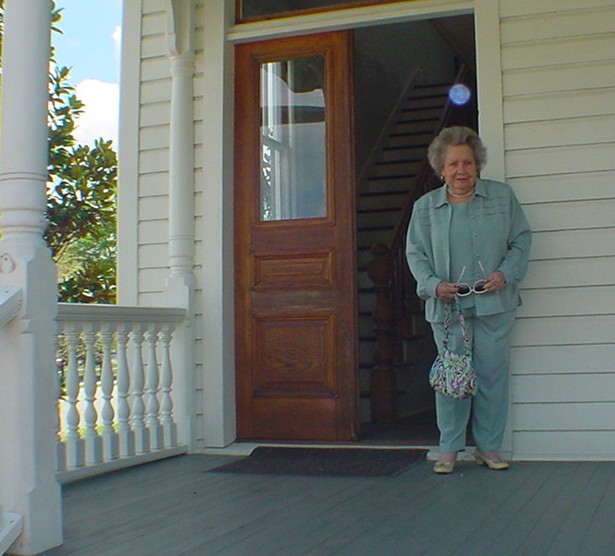
Twenty years ago, more than 100 members of the Jacksonville History Society and descendants of the Merrill family attended a ceremony on November 17, 2005, to celebrate the restoration of the James E. Merrill House Museum. At the celebration, 90-year-old Ann Merrill Gillette, the granddaughter born in the house in 1914, was given the key to open the front door on the night of the opening.
The house was originally built in 1879 by James E. Merrill and was located at the corner of Monroe and Lafayette Street, approximately where the arena parking garage is located today. In 1886, the house was enlarged and designed as an Eastlake Victorian house. From his bedroom on the second floor, Mr. Merrill could see the shipyards, located two blocks away.
After being sold to the second owner in 1920, the house was occupied by the Leach family and then sold but was left vacant. While in that state, a tree fell on the roof and grew to be part of the house. Water damage from the tree ruined part of the hardwood floors, constructed primarily of heart of pine and cypress. Much of the original wood was used when restoring, and any wood left over was used to make something useful for the house. The original shutters are on the tower, which is on the south side of the house, facing Old St. Andrew’s Church.
When the house was moved to its present location at the corner of Duval Street and A. Philip Randolph Blvd., and before the restoration, someone pulled up to the house, put a chain around a post on the front porch, and pulled away with the front porch. Fortunately, three spindles were left in the yard, making it possible to recreate the porch.
Because James E. Merrill formed Merrill-Stevens Shipbuilding with his brother Alexander and partner Arthur Stevens, it seems likely that some of his crews were used in building some areas of the house. The evidence of this is shown in the structural elements and finishing touches that were not part of the period. It was noted that all the interior doors were thinner than standard lumber, which is common on ships because thinner doors meant less weight.
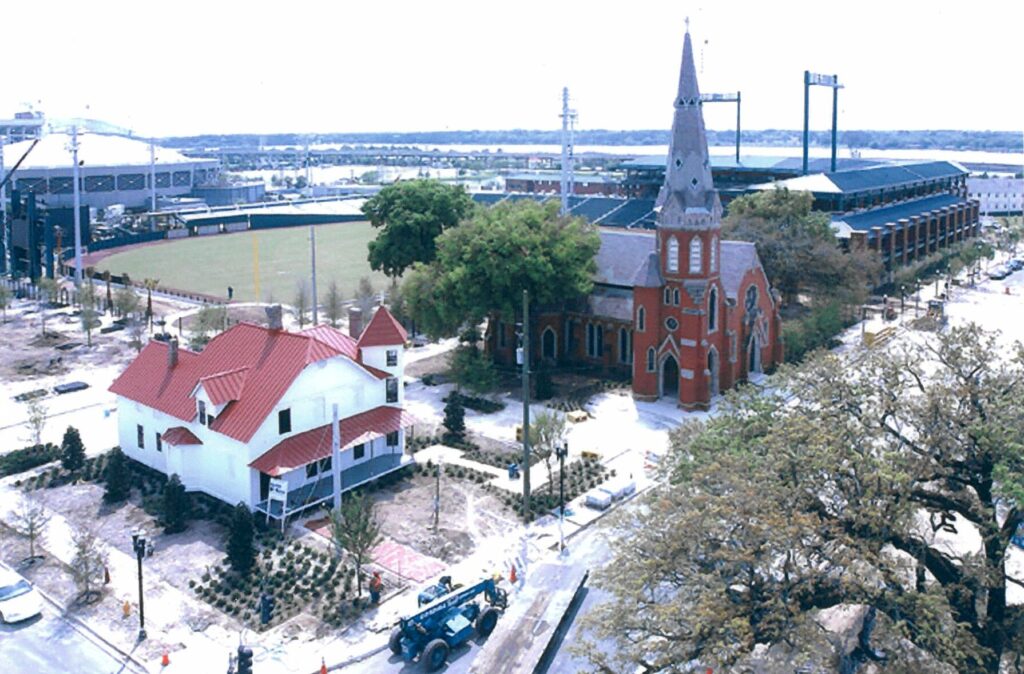
When restoring the house, great effort was taken to portray the house as if the family was still living there. The restoration crew worked hard to ensure nothing looked brand new.
Over the past 20 years, many families and groups have visited the house. School groups are informed as to what life was like in 1903. The Merrills had four children, and items in the house reflect the clothing, toys, and way of life for the Merrill offspring.
It is so important for the citizens of Jacksonville to understand the history of the Merrill House so they can feel connected to the house and the city of Jacksonville. During tours, for anyone not able to use the staircase, there is a place for them to sit and peruse a book of photos of all the rooms and special items located upstairs.
If you would like to learn about the Merrill House, but are unable to visit, I am happy to come and talk to your group about the family and the history of the Merrill house. Once you hear their story and see photographs of the family, the house, and the ships, I hope this will encourage you to come and visit in person. This lovely, decorated Victorian house was restored for the citizens of Jacksonville to learn about the contributions of the Merrill family and the ships built to support World War I and World War II. Happy 20th Anniversary to the restored Merrill House.
Contact our office at 904.665.0064 or email [email protected] for a tour of the house.
Nancy Gandy | Merrill House Museum Coordinator