

The Jacksonville History Center Campus
A Place for Our Community to Learn, Discover Who We Are, and Understand How History Informs Our Future
The former Florida Casket Company building and Old St. Luke’s Hospital–two of Jacksonville’s significant historic landmarks–anchor the main campus of the Jacksonville History Center. Located at 318 and 314 Palmetto Street in the Sports & Entertainment District, these spaces invite all to discover and explore the people, places, and events that shaped our city, advancing our mission to connect communities and strengthen citizenship through history education.
HISTORY CENTER BUILDING
The centerpiece of The Jacksonville History Center is the former Florida Casket Company, a three-story, ca. 1920 building that has been fully renovated—including building additions on the east and west sides of the structure, a catering kitchen, public restrooms on two floors, and the careful restoration and construction of all three floors. The building opened in the spring of 2025 for events, public programs, and community gatherings, marking an exciting new chapter in the History Center’s evolution.
In the next phase of the project, the first floor is envisioned as home to immersive, themed exhibits that will bring Jacksonville’s history to life through interactive displays and storytelling. The second floor offers a flexible space for public programs, special events, and rotating exhibits. On the third floor, the Jacksonville History Collection provides access to thousands of photographs, manuscripts, and artifacts for researchers and the public alike.

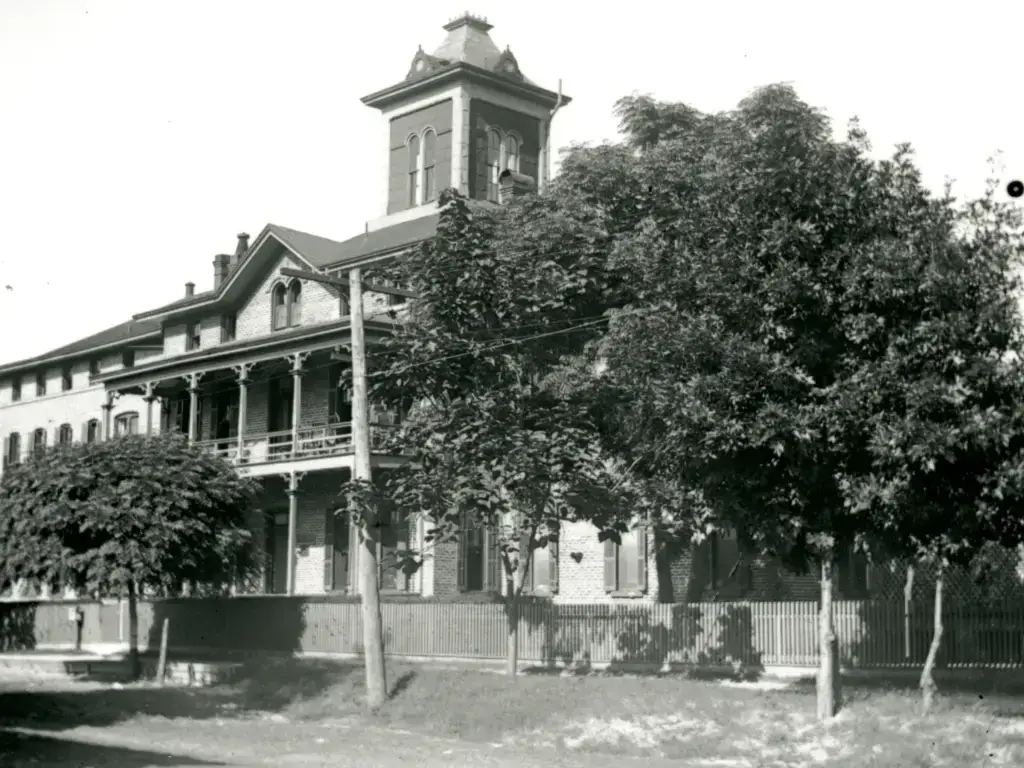
OLD ST. LUKE’S HOSPITAL
Built in 1878, Old St. Luke’s Hospital is Florida’s first purpose-built hospital and the state’s first charity hospital. It also housed Florida’s first nursing school, founded in 1885. The hospital served Jacksonville for 36 years before the property was sold to the Florida Casket Company in 1914, which operated there until 1966. The building was later used as a warehouse and stood vacant until it was listed on the National Register of Historic Places in 1972. After partial demolition in 1975, restoration efforts began, including reconstruction of the porches and attic cupola to match the original design.
Today, plans for restoring the Old St. Luke’s Hospital building include a range of exterior and interior improvements to preserve and enhance this historic landmark. The work will address structural and aesthetic needs, with updates to key systems and efforts to restore original architectural features. Once completed, the space will include a new permanent medical history museum.
Other Properties
In addition to our main campus, the Jacksonville History Center stewards two other historic landmarks that enrich our city’s cultural landscape. The James E. Merrill House Museum and Old St. Andrew’s Church offer immersive experiences in Victorian-era life and Gothic Revival architecture, respectively—each preserved in partnership with the City of Jacksonville and open for tours, programs, and public history education.
THE JAMES E. MERRILL HOUSE
When you step inside the James E. Merrill House, you’re transported to Jacksonville at the dawn of the 20th century. Built in the 1870s and lovingly restored, this fully furnished home offers an authentic glimpse into middle-class life in 1903, just as the Merrill family—and many of their East Jacksonville neighbors—would have experienced it. It is also one of the city’s finest surviving examples of Queen Anne–Eastlake Victorian architecture, reflecting the craftsmanship and character of its time.
The home’s distinctive features include a square tower on the southwest corner, an ornate vergeboard in the north gable, and Eastlake-style porch posts, brackets, and spindles. It remains the largest and most architecturally significant 19th-century residence in East Jacksonville.
James E. Merrill, a prominent Jacksonville industrialist, established the shipbuilding business that evolved into Merrill-Stevens Engineering Co.—a firm that supported U.S. naval operations from the Spanish-American War through World War II. The Merrill House, his family’s former residence, narrowly escaped demolition in 2000 thanks to a joint preservation effort by the City of Jacksonville and the Jacksonville Historical Society (now the Jacksonville History Center). Today, the restored home offers a rare glimpse into the city’s Victorian era, complete with period furnishings, early plumbing, and limited electricity.
Please call the JHC office at 904.665.0064 or email [email protected] to schedule a tour. A $10 per person donation is suggested. Active members of the JHC enjoy free admission. To become a member, click here.


OLD SAINT ANDREW'S CHURCH
Old St. Andrew’s Church is one of Jacksonville’s finest surviving examples of 19th-century Gothic Revival architecture. Built in 1888 of pressed brick with black mortar and stone trim, the church features rich interior details including paneled yellow pine ceilings, solid mahogany doors, and Florida pine woodwork throughout. Its 120-foot tower—once the tallest structure in the city—remains a distinctive landmark. Remarkably, Old St. Andrew’s was the only major church to survive Jacksonville’s Great Fire of 1901.
As the surrounding neighborhood declined in the 20th century, the church was vacated and fell into disrepair. By the early 1990s, it had stood empty for more than three decades, facing an uncertain future. Its preservation became possible through an unexpected turn of events: when the Jacksonville Jaguars NFL franchise was established, the city acquired land around the new stadium—including the church site. The Jacksonville Historical Society, as we were then known, was granted rights to the building on the condition that it be restored. With support from the City of Jacksonville and a challenge grant from the J. Wayne and Delores Barr Weaver Foundation, the organization raised $1 million to complete the restoration.
Today, Old St. Andrew’s is a cherished part of the Jacksonville History Center. It serves as a vibrant venue for meetings, weddings, and civic events — and stands as a powerful symbol of successful historic preservation.
Interested in hosting your event at Old St. Andrew’s? Click here to schedule a rental consultation and learn more.