

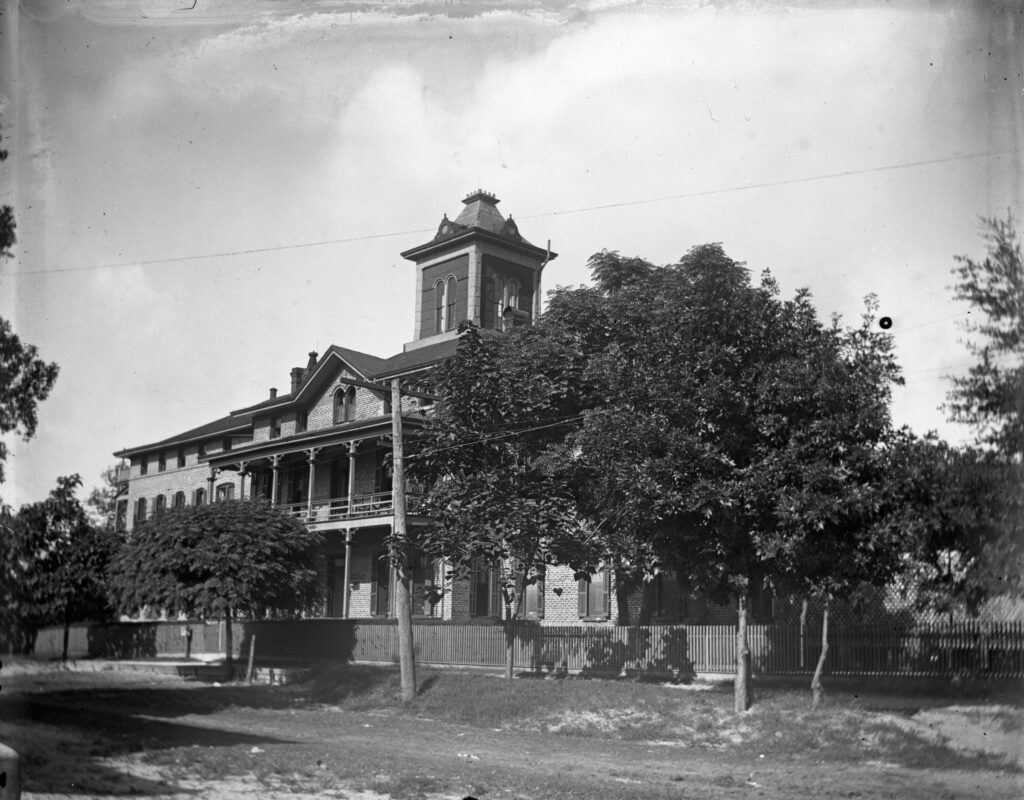
At 314 Palmetto Street, in Downtown Jacksonville, sits the office and archive building for the Jacksonville History Center. Staff, interns and volunteers at the Center have the pleasure of working in the first building designed in Florida to serve as a modern hospital. Old St. Luke’s Hospital was built in 1878, but the organization has existed since 1873, when three women saw a need for some generosity in their city.
In 1872, Mrs. Theodore (Susan) Hartridge, Mrs. Aristides (Anna) Doggett, and Mrs. J.D. (Myra) Mitchell wanted to find a way to help sick travelers in Jacksonville. At the time, there were no hospitals in Duval County available to travelers, which led to the unnecessary deaths of multiple visitors to the city. To prevent the deaths of more travelers, the three women formed the “Relief Association of Jacksonville,” which helped sick travelers be placed where they could receive help. After just a year, the association became so popular these women decided it was time they opened their own hospital, and thus came St. Luke’s Hospital. These women made this happen through their own charitable donations, and plenty of fundraising, by holding fairs and fundraising meetings. Eventually, in 1873, they had the funds to rent a small two-room building.
In 1873, the St. Luke’s Hospital Association was officially formed. The association was run by a board of two presidents, five vice presidents, a secretary, and a treasurer. One of the vice presidents elected was Martha Reed Mitchell. She was well known around Jacksonville as a woman of great prominence, having been a founding member of the Mount Vernon Ladies’ Association, prior to moving to Jacksonville in 1866. Martha was extremely passionate about charity and would serve as the president of St. Luke’s Hospital Association for 25 years.
The hospital gained popularity and support from all around Jacksonville, and within their first operational year, they found the need to expand, so they bought a plot of land on the corner of Market and Caroline Streets. Mr. F. Leede was hired as the contractor for the new building, but the construction was halted due to insufficient funds. Wanting to still expand, the St. Luke’s Hospital Association held annual winter fairs, which raised thousands of dollars. Finally, in 1875 they broke ground on their new hospital. It was to be a completely modern facility with all the new amenities, however in 1876, the almost completed building caught fire and was destroyed. The association decided to sell the land and buy a new plot on Palmetto Street. With the $6,000 they received from insurance and additional funding, they were able to build the Old St. Luke’s Hospital building, which was completed in 1878. The Old St. Luke’s building would house the hospital until 1914 when the hospital moved to Springfield.
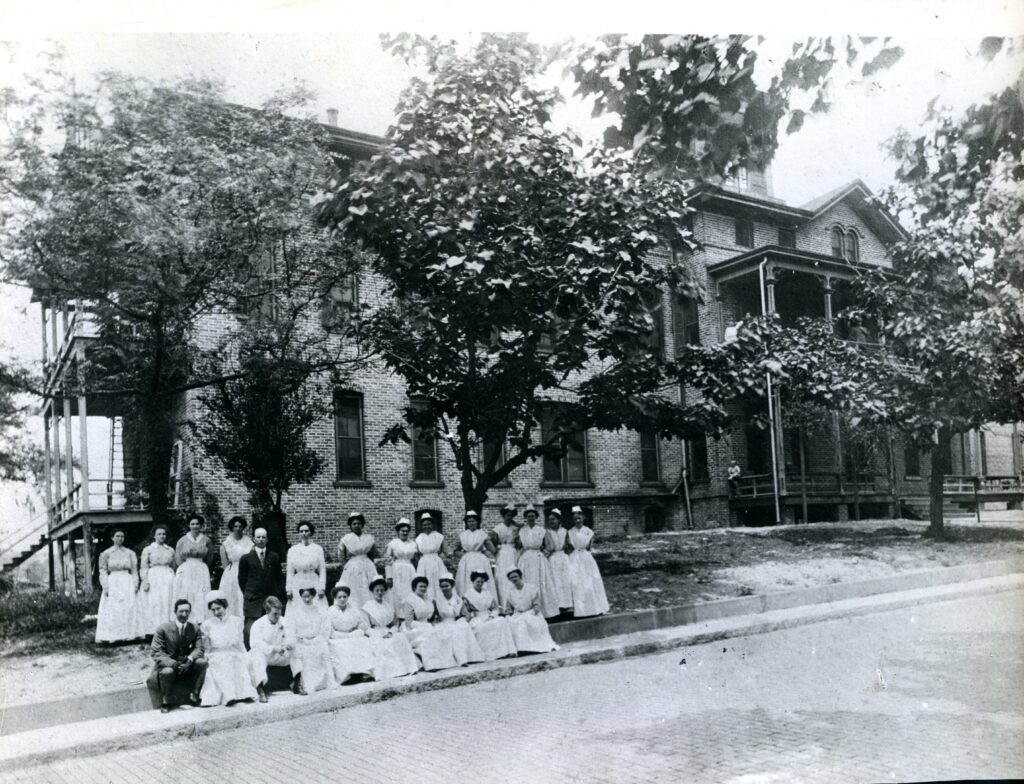
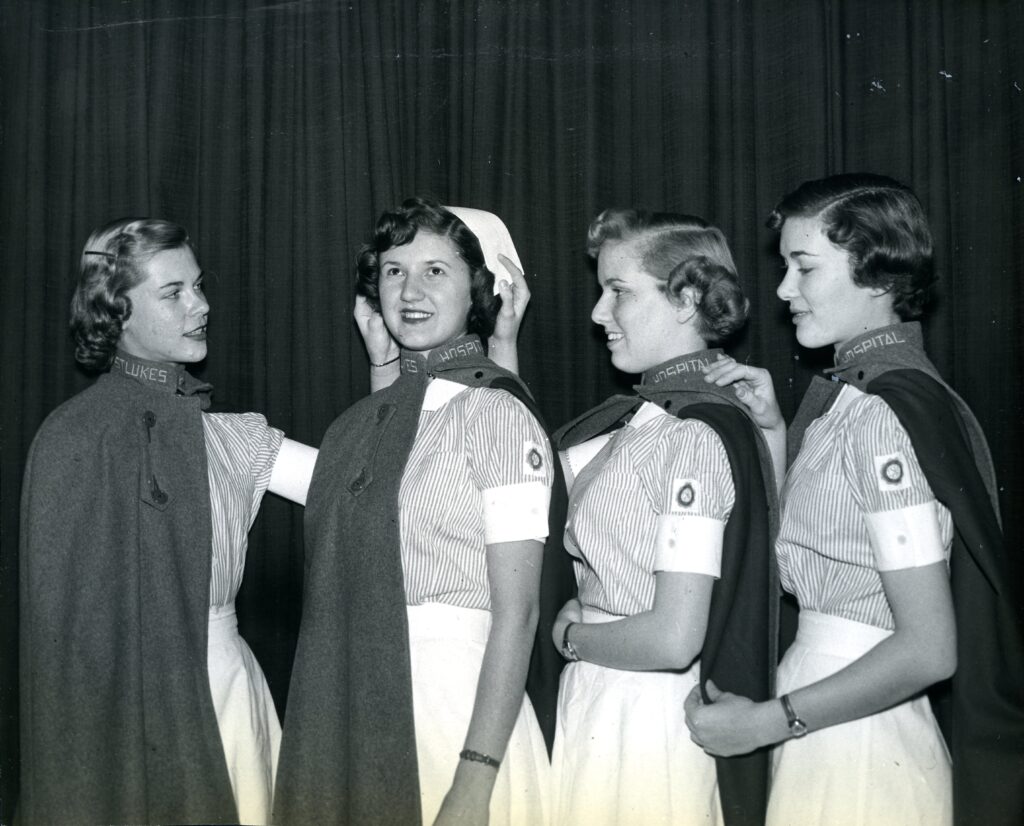
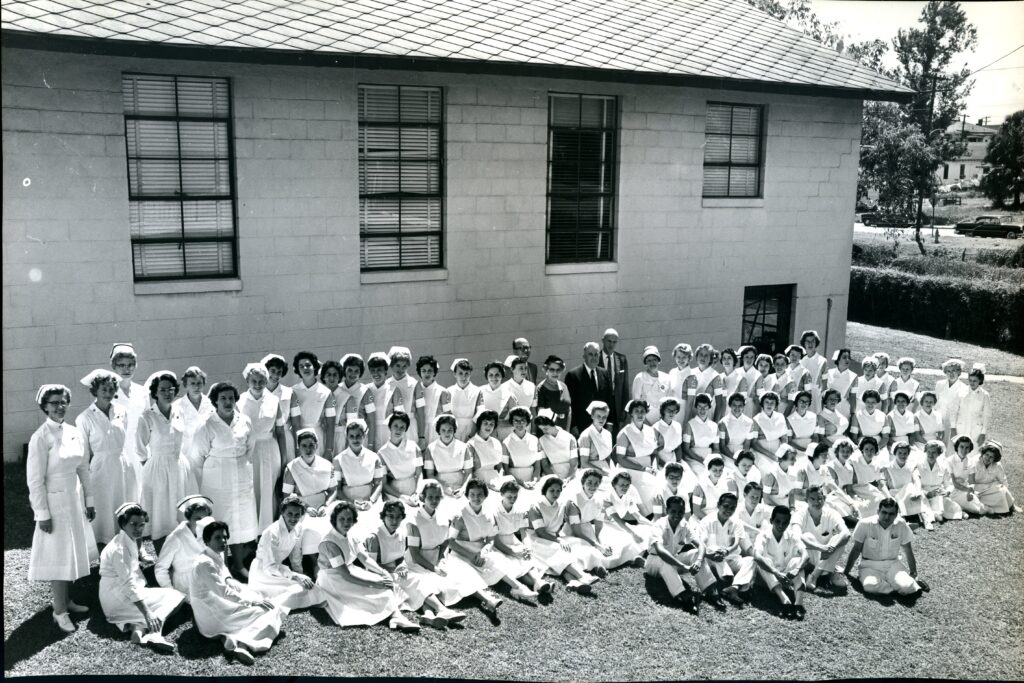
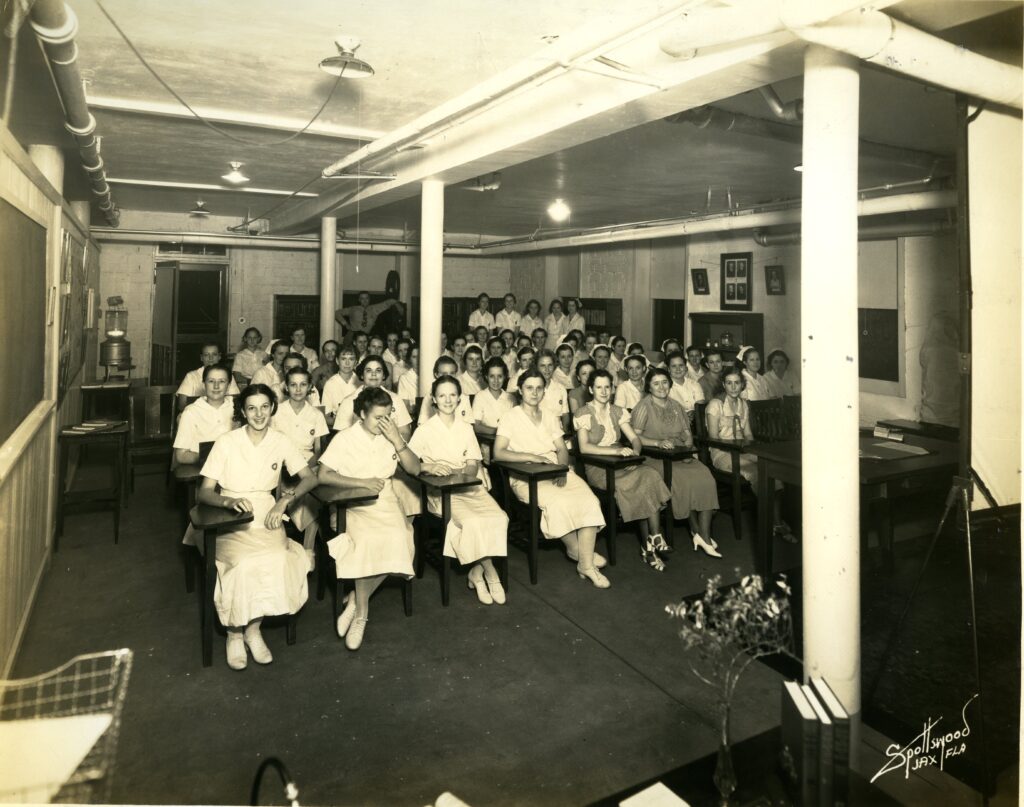
In 1885, the St. Luke’s nursing program was established. This program was the first modern nursing school in Florida. Later, in 1888, the Jacksonville Board of Health took over the hospital’s operations, however, this did not slow the nursing program’s growth. St. Luke’s Hospital became a place where women could begin their careers in the medical field, and from 1885-1965 the nursing program educated generations of nurses in Jacksonville. One graduate, Carolyn Drake, acted as the Education Director for the program from 1957 to 1959. Drake eventually came out of retirement to help run the new nursing program at the Florida Junior College in 1967. The program retained a vibrant alumni association; in 1981 the lifetime member count was 111. Unfortunately, as the nursing program ended, so did the alumni association. In 1987, the hospital was taken over by Mayo Clinic, but retained the name St. Luke’s. Then, in 2005, it became a part of the St. Vincent’s healthcare family, in partnership with Mayo Clinic. Eventually, in 2008 St. Vincent’s became the sole operations controller and the hospital became Ascension St. Vincent’s Medical Center.
As the hospital has changed, so has the Old St. Luke’s building. In 2012, the Jacksonville Historical Society (dba Jacksonville History Center) acquired the building and began restorations to house its offices and archives. A building that was once a place of safekeeping for those who were sick and suffering is now a place of safekeeping for historical documents, objects, and publications.
Cosette Steeves | Assistant Archivist