

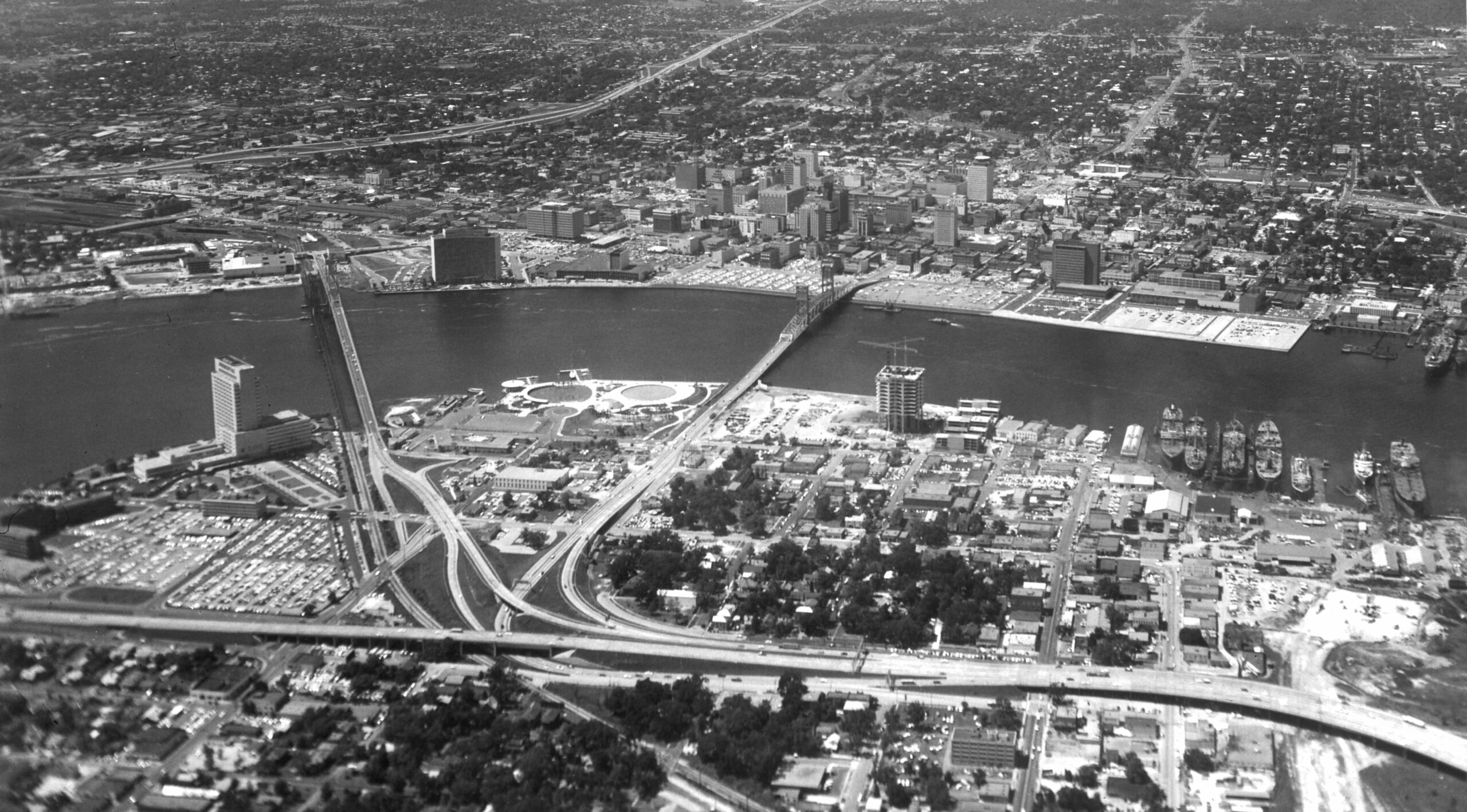
As the Jacksonville History Center designs new exhibits and galleries aimed at educating visitors, we keep in mind our mission statement: “to connect communities and strengthen citizenship through history education.” The phrase “connecting communities” is important because of how sprawling and diverse Jacksonville is. This city is a constellation of neighborhoods, each with its own name and place. By identifying and locating them, the History Center will bring their people more fully into Jacksonville’s identity.
When we feel seen and heard, we feel known. We may come and go, but home is in the places where we are known. One of the ways the History Center plans to help people feel seen and heard is to share stories about the people and events of the past, showing where they happened. Mapping a story makes it local to a place in Jacksonville. That matters to the people of that place and helps residents and visitors better understand Jacksonville.
For example, the Mayport jetties are seldom seen by most people, but for 145 years they have been responsible for Jacksonville’s development as a seaport and a Navy town. Our exhibit will illustrate that, in an engaging display that not only tells, but that shows the who, what, and why of their story, and that also answers the “So what?” question. Why should anyone care about the Mayport jetties? Visitors to the Jacksonville History Center will know why they matter in the 21st century, and the people of Baldwin, on Jacksonville’s far west side, will know how their town’s namesake literally changed the course of the region’s growth.
Where did A. Philip Randolph grow up in 19th century Jacksonville, and what connects his story to the residential “redlining” during the Great Depression and today’s revival of the historic Out East community? Where did the Skinner family settle in Duval County, and how did their century of decisions affect the shape of Jacksonville? Where did the U.S. Navy build airfields during the 1930s and 1940s, and how do those location decisions reach out from the past 80 years later? The best example is the massive Naval Air Station Cecil Field, now Cecil Airport and the scene of an equally massive economic renaissance.
Jacksonville’s most influential geographic feature is the St. Johns River. It simultaneously connects and divides us, as it can be crossed at just eight locations in the City of Jacksonville. The same is true of Jacksonville’s miles of limited-access expressways, such as Interstate 95, Interstate 295, Interstate10, State Road 202 (Butler Boulevard), and the Arlington Expressway. Expressways are like rivers, connecting and separating communities. I-95 connects Harriet Beecher Stowe’s Mandarin with the Northside of the Broward family, but it divides San Marco from St. Nicholas, and in paving over Sugar Hill, the interstate split James Weldon Johnson’s community of LaVilla from the streetcar neighborhood named Durkeeville.
Meanwhile, the Intracoastal Waterway separates Jacksonville from its beaches. Four bridges lead to the oceanfront, and one more to the historic Ft. George Island home of Zephaniah Kingsley. Still standing after 228 years, it is Jacksonville’s oldest dwelling and helps tell stories that reflect the broad arc of American history.
Those are some of the themes and ways of interpreting them in the History Center designs now underway. Jacksonville has many neighborhoods, each with its own story. Sharing them authentically will be challenging. The value of that work is already visible in the interest and engagement of people from across this big, interesting city, and beyond. With their support, Jacksonville will soon have the public history venue that it deserves. To stay in touch, and to learn more about our plans and how to become involved, please visit www.jaxhistory.org
Alan J. Bliss, Ph.D. | CEO, Jacksonville History Center
Image shown of Downtown Jacksonville ca. 1966 by photographer Leo Witt. Note the Sheraton Hotel under construction on Riverplace Drive. [From the Jacksonville History Center Collection]