

One hundred and twenty-five years ago, the great fire of Jacksonville happened on May 3, 1901, shortly after noon. From a pile of drying moss at the Cleaveland Fibre Factory, the fire quickly spread. Within eight hours, a total of 2,368 buildings and 146 blocks were lost. The fire did not discriminate, destroying the property of both the wealthy and the poor. Acres of beautiful grass and trees, homes, businesses, factories, docks, and churches were in ruins.
In the James E. Merrill House Museum’s front parlor is an 1845 painting by Julia DuPree Bounetheau, the mother of Henry Bounetheau, Jr. of a girls’ school in Aiken, South Carolina. Henry lived at Market and Bay Street. With the fire so close, Henry ran back to his house to save his mother’s painting. The painting was found placed against an oak tree near the river. Two days after the fire, Henry’s body was found; he saved his mother’s painting but lost his life. There are two holes in the painting from the fire.
There are so many stories from the fire. The most engaging way to learn about the fire is the book “The Great Fire of 1901” by Bill Foley and Wayne Wood. This book describes the city before the fire; includes photos of buildings/homes before and after the fire; the steps which were taken by the city to help the more than 10,000 people left homeless; and the rebuilding of Jacksonville. You can purchase it from our online bookstore here.
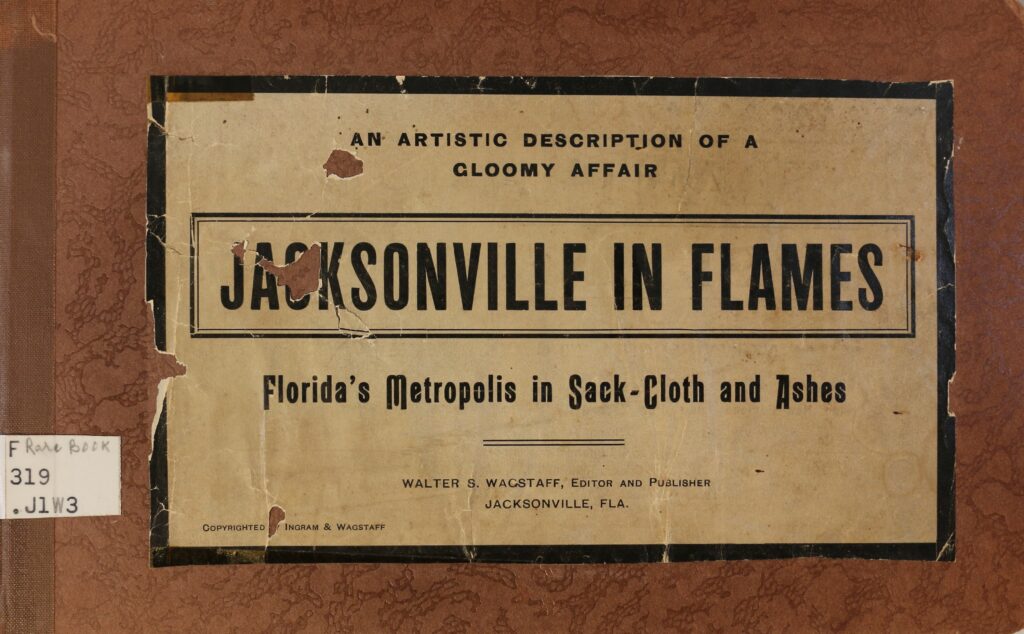
In the Jacksonville History Center research library is a great little book, “An Artistic Description of a Gloomy Affair – Jacksonville in Flames – Florida’s Metropolis in Sack-Cloth and Ashes,” by Walter S. Wagstaff, Editor and Publisher. In this book are pictures of the city in flames and lists. The one that caught my eye was “A List of the Sufferers – Public and Private Buildings Destroyed: Churches and Schools, Banks-Hotels-Clubs; Along River Front; Blocks and Buildings-Private and Public; Companies and Business Firms; and Citizens Whose Homes and Personal Effects were Destroyed.”
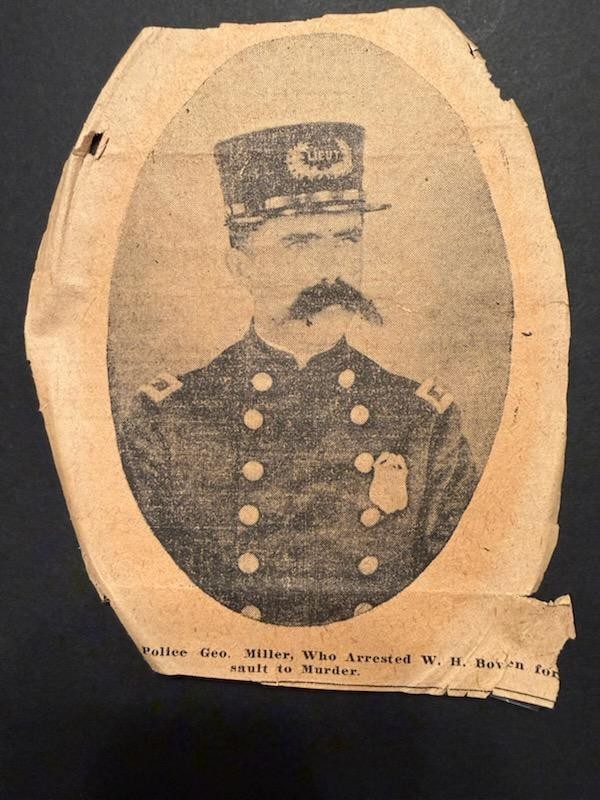
This is where it gets interesting. Looking through this list in alphabetical order, I came across my grandfather: Miller, G. W. Under his name is: Miller, Eliza. This is George’s mother and my great-grandmother. Also listed was a name: Menager, Victoria A. This was a great-great aunt of mine. My grandfather was a police officer at that time. I have heard stories about my family here, but I had never heard about them losing a home during the fire.
This is a great book for learning if your relatives were some of the “Sufferers” listed after the fire. There are so many hidden treasurers in the Archives of the Jacksonville History Center. Every day I am surprised at information I find, which I was not looking for, but was related in some way to what I was looking for.
At a bank, I can withdraw money, spend it, and it’s gone. But at the Jacksonville History Center, I can withdraw history, read it, and store it in my memories, and pass on to others!

Nancy Gandy | Merrill House Museum Coordinator